You picked your major at 18, off a TikTok.
Now you're $40,000 in and hate every class. The decision was made by someone who didn't know any better yet. Sunk-cost is eating you alive.
Most tests sort you into just 5–20 types.
All 180 calculated from your date, time, and place of birth — the alternative to personality quizzes that put you in a bucket.
58% of young adults report lacking meaning or purpose in their lives — the kind of clarity that makes career, relationship, and life decisions feel less like guessing.
Source: Harvard Making Caring Common, “On Edge” report, 2023
You picked your major at 18, off a TikTok.
Now you're $40,000 in and hate every class. The decision was made by someone who didn't know any better yet. Sunk-cost is eating you alive.
Everyone seems to have a 'thing.' You feel like a placeholder person.
Your roommate codes for fun. Your friend wants to be a pilot. You literally don't know what you like. You start to wonder if you're missing whatever they have.
Career services gave you a personality quiz and a worksheet from 2008.
Thirty-minute slot. Generic Holland code. A list of jobs you've heard of since middle school. The advice that costs nothing produces nothing.
Switch now and lose a year. Don't, and waste four.
You're three semesters in and stuck. You want a clear framework to think this through — with objective information, not a coin flip.
You keep taking quizzes that just describe you back to you.
They all label you 'investigative' or 'creative' or 'social' and call it done. None of them tells you what to actually do on Tuesday afternoon.
You give us your date, time, and place of birth. A deterministic algorithm runs over 150,000 parameters through a calculation model and returns 180 numerical scores — one per innate talent.
Birth data, not self-report. Your answers can't bias the result, because there are no answers.
Many times more granular than the broad-bucket personality models you've seen — fine enough for nuanced reflection rather than coarse types.
The calculation is deterministic by construction (r = 1.00) — your profile doesn't drift between Tuesday and Friday.
Your innate profile doesn't change at 25, 35, or 50. You buy it once. We don't ask you to renew.
Personality quizzes (MBTI-type tests, Strong, etc.)
The default first stop
An algorithm, not a quiz
Sources: NCES (2024), NACE Career Services Benchmark Survey (2023), Pittenger (1993) and Capraro & Capraro (2002) on self-report instrument retest stability, Donovan, Dwight & Hurtz (2003) on self-report bias.
Each talent gets a score from 0 to 100+, a category, and a description with a real-world analogue. Multiplied by 180, organised into 16 categories.
Intellectual Abilities · 1.7 Memory and Memorization
An extraordinary capacity to memorize and reproduce auditory information - music, speeches, sounds, like a musical genius able to reproduce the most complex composition after a single hearing.
16 categories. 180 talents.
Explore all 180 talents organised into 16 categories
Independent biographers ranked all 180 talents for 269 well-documented public figures. Innate Q's computed profile aligned with their ranking at a level within the range commonly seen for peer-rated and supervisor-rated personality instruments.
Each ranked across all 180 talents by independent biographer agents grounded strictly in published biographical literature.
Within the range commonly seen for peer-rated and supervisor-rated personality instruments in academic literature. Higher than self-IQ ↔ measured IQ (~0.35).
Innate Q's profile beat three random baselines per person. t = +17.04, p < 10⁻⁴⁰.
Deterministic by construction. The profile doesn't drift between Tuesday and Friday like a self-report quiz.
The validity findings summarised above are internal research findings.
"Should I switch from CS to design?"
"Why do I hate organic chemistry if I'm pre-med?"
"What kind of work actually fits the way I think?"
"What kinds of work environments tend to suit my profile?"
"My parents pushed me into this — am I really suited for it?"
Inside your Innate Q profile lives an AI Mentor with your full 180-talent profile loaded. Unlike a blank chatbot, you don't have to explain who you are first.
The conversation starts where your situation actually starts — with structured information about your innate strengths, not whatever you happen to type.
Disclaimer: The AI Mentor is a reflection tool. For major life decisions, also consult qualified advisors.
The questionnaire your AI Mentor draws on. Your studies are one slice — the same five categories every adult Innate Q user answers ground the advice in your actual life.
5 categories
Partner, family, classmates, social circle
Studies, side jobs, where you're heading next
What drives you, what you trade off, what you protect
Energy, body, sense of meaning
Hobbies, expression, what you make
Your answers are encrypted.
When students tell us they're "lost," we know what they mean. Most of the people we'd now call iconic were also lost at the same age. Three of them — what they were doing at 22, and what their innate profile says they were built for.
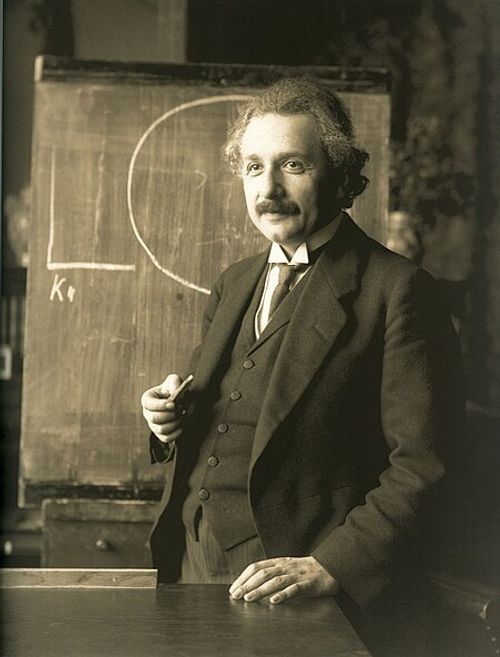
At 22, working as a clerk in the Swiss Patent Office in Bern. Failed his first attempt to enter the Polytechnic in Zurich. Doctoral dissertation rejected. "Miracle year" papers still three years away.
Top three innate talents
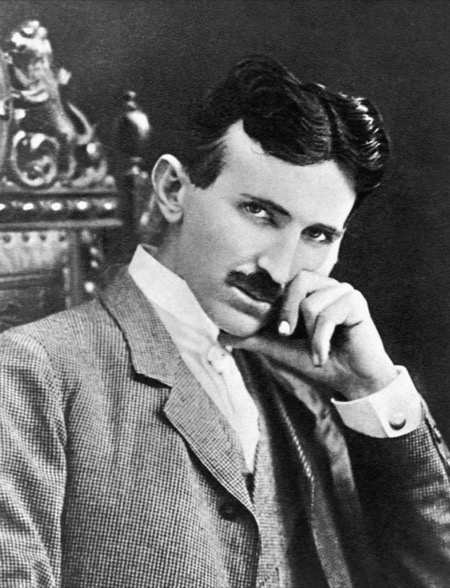
At 22, had dropped out of Joanneum Polytechnic in Graz, lost his scholarship and disappeared from family contact. A breakdown his parents thought might be his end. Years of drafting jobs in obscurity. The first patents — and the AC induction motor — were still a decade away.
Top three innate talents
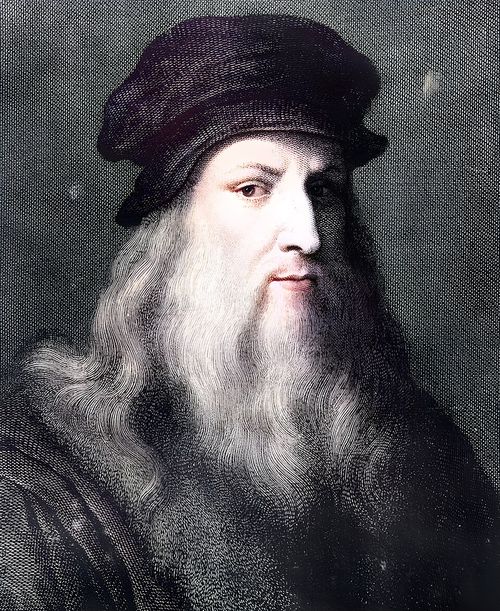
At 22, just leaving Andrea del Verrocchio's workshop in Florence after eight years of apprenticeship. Hadn't picked one craft. Painting, sculpture, engineering, anatomy were all in play. The criticism — "he never finishes anything" — had already started.
Top three innate talents
Lost-at-22 is not a failure mode. It's just the part you're in.
Your innate talent profile doesn't expire. There is no subscription cycle attached to it. Add a structured layer of self-knowledge as you explore your path.
one-time payment
one-time, valid for life
per profile · 3 seats
* Additional requests and Insights subscription can be purchased in the app
It uses birth data the way GPS uses coordinates: as objective input. Astrology interprets symbolic meanings of planets and houses to produce predictions or character readings. Innate Q runs a deterministic calculation across 150,000+ parameters and outputs 180 numerical scores. There is no symbolism, no interpretation step, no horoscope. Same input, same output, every time.
It surfaces your innate strengths as structured input for self-reflection — most students report the answer becomes clearer once they see the profile.
Time of birth substantially improves precision on a subset of the 180 talents — though an inaccuracy of 5–10 minutes is usually not significant. Most people can find it on their birth certificate, hospital records, or by asking a parent. If exact time isn't available, the calculation still runs with reduced resolution on the affected talents. The Gold tier ($500) includes a birth-time rectification process to the exact minute if you need maximum precision.
You'll complete an extensive questionnaire about life events, which our specialists then analyse manually within the suspected time window.
MBTI gives you 1 of 16 types based on a self-report quiz, where about 75% of people get a different result on retake. Innate Q gives you 180 computed scores derived from objective birth data — the same answer every time, by design. MBTI describes a category. Innate Q gives you a multi-dimensional profile with development guidance.
That tension is the point. Your self-perception was shaped by parents, teachers, classmates, and the life you happened to land in. Innate Q surfaces what's there underneath those layers — what you'd be drawn to if no one had told you who to be. Many students find a few of their top talents are obvious in retrospect. Some are surprising. The surprises are usually where the most useful information lives.
Yes. Many students do. Parents can view the full report and the underlying profile. The methodology is plain and the report is written for laypeople. There is nothing in the calculation that requires hiding.
Take the $5 trial. See your 3rd strongest talent out of 180. If it resonates, you'll know — and the full profile is yours after that. If it doesn't, you've spent five dollars.
See your Talent MapDisclaimer: Innate Q provides self-knowledge insights based on date, time, and place of birth. It is not a substitute for medical, psychological, financial, or career counseling. Use insights as a complement to your own judgment and professional advice.